


而椅|Er Chair
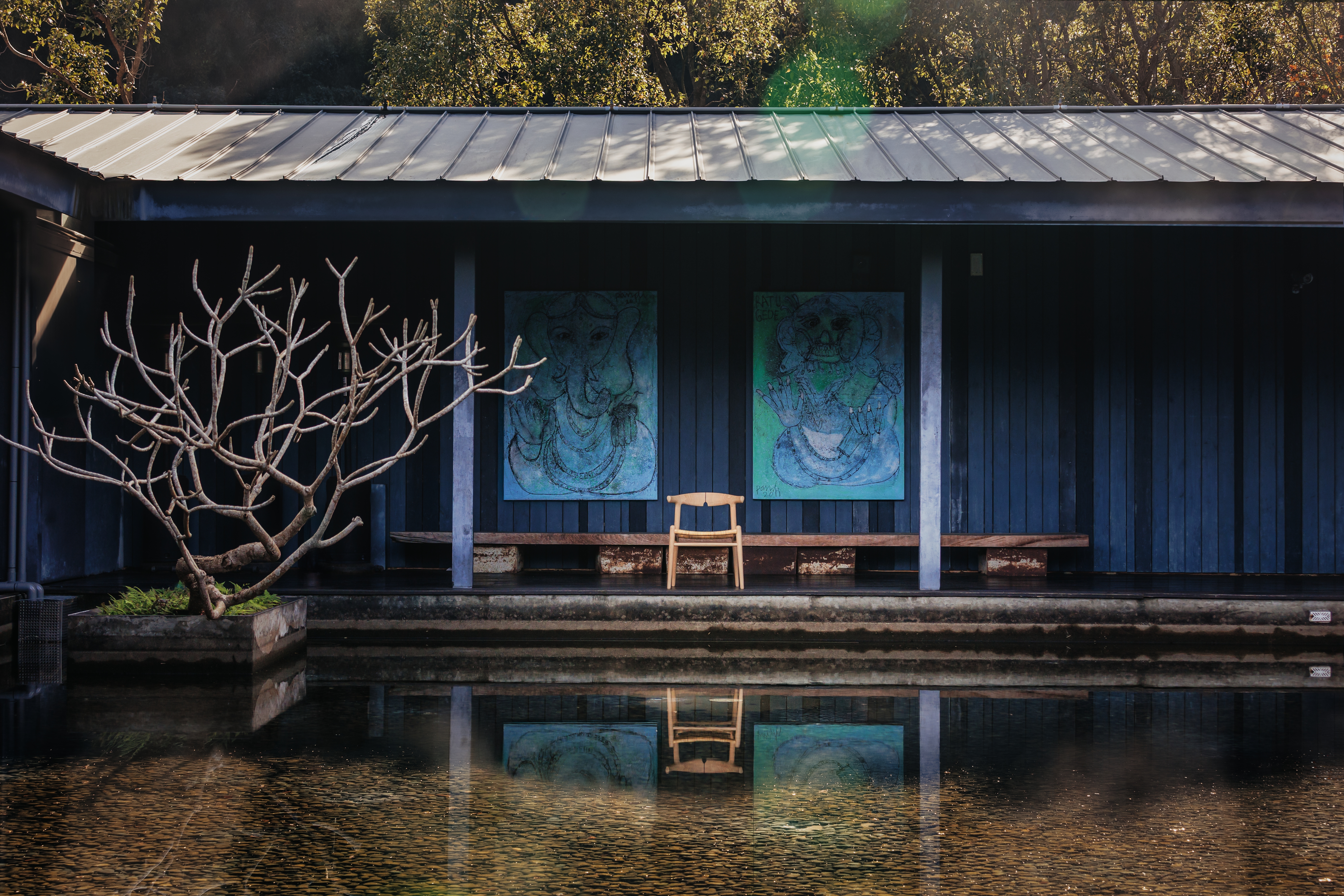
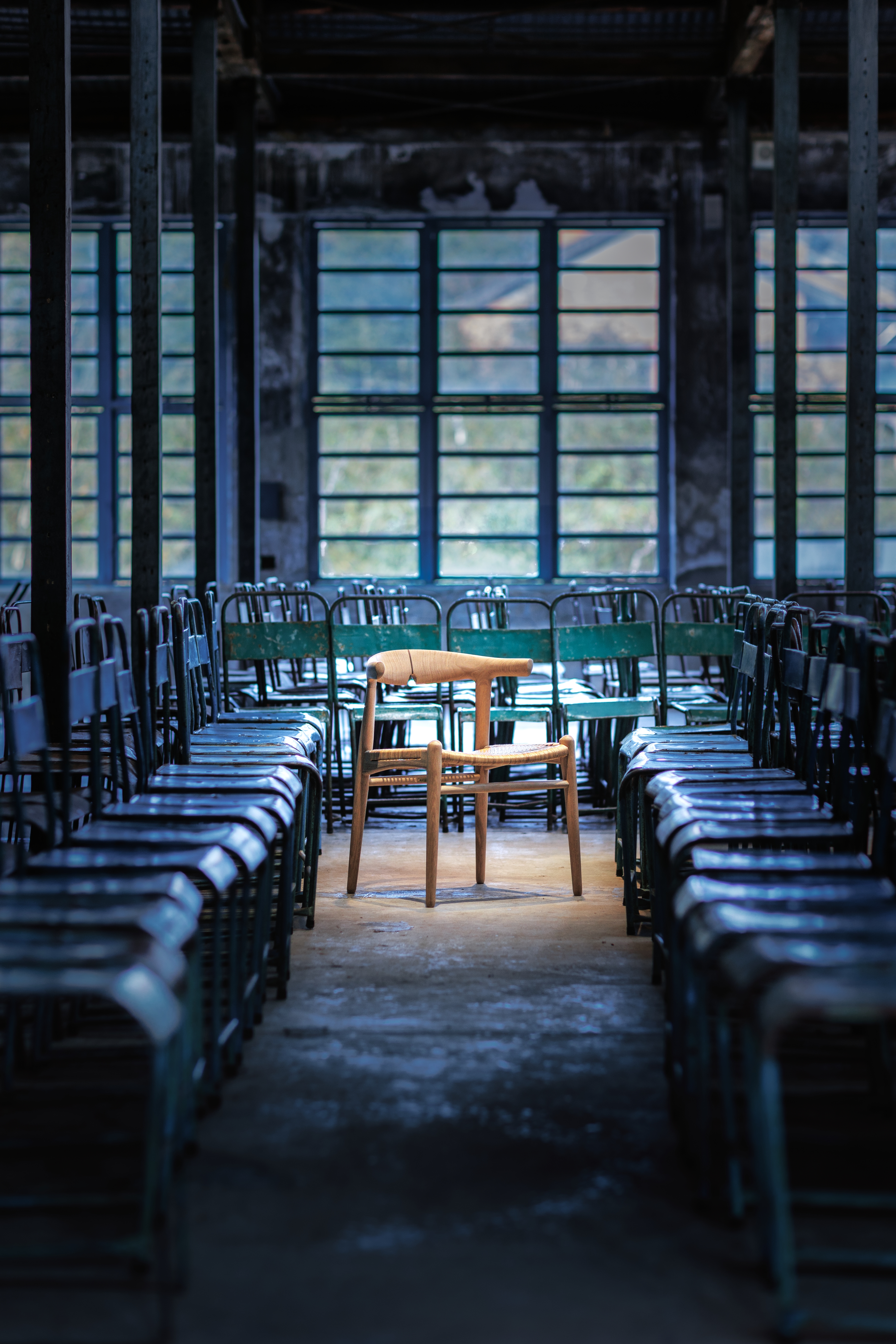
Inspired by Taiwan's agricultural heritage, Er Chair reinterprets the image of the water buffalo. The inverted U-shaped opening in the backrest symbolizes the journey from restraint to freedom, allowing culture to be rediscovered through everyday use.
以台灣農耕文化為靈感,轉譯水牛意象。椅背倒 U 形缺口,隱喻由束縛走向自由,使文化在日常使用中得以重新感知。

Er Chair translates cultural narratives across space and time, returning design to everyday life where it can be genuinely used and experienced. The work draws upon the Scandinavian design ethos of restraint and merges it with local cultural vocabulary, centering on the principle of preserving the essence while allowing form to evolve. Through precise articulation of structure and detailing, it expresses a quiet yet refined sense of craftsmanship.
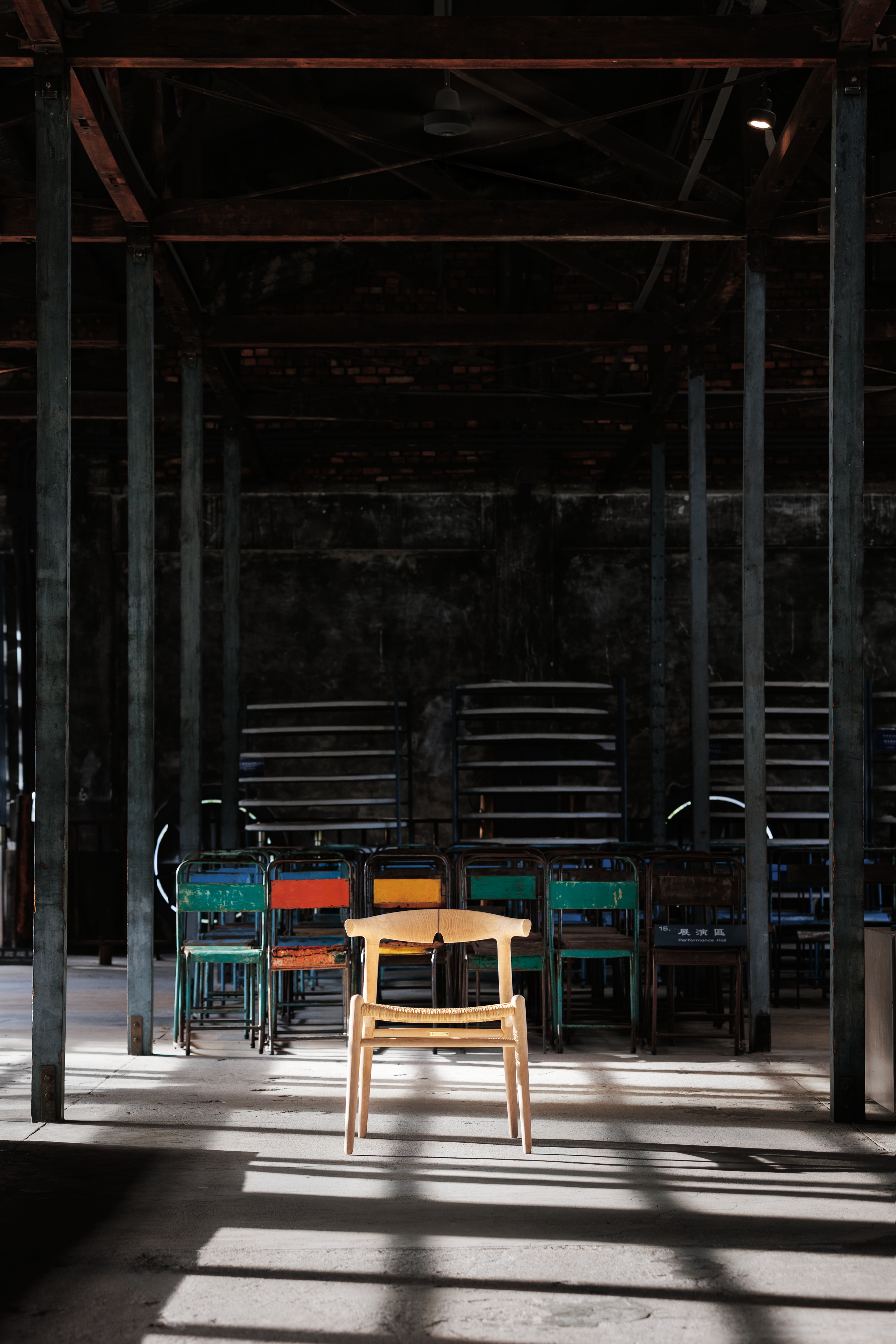
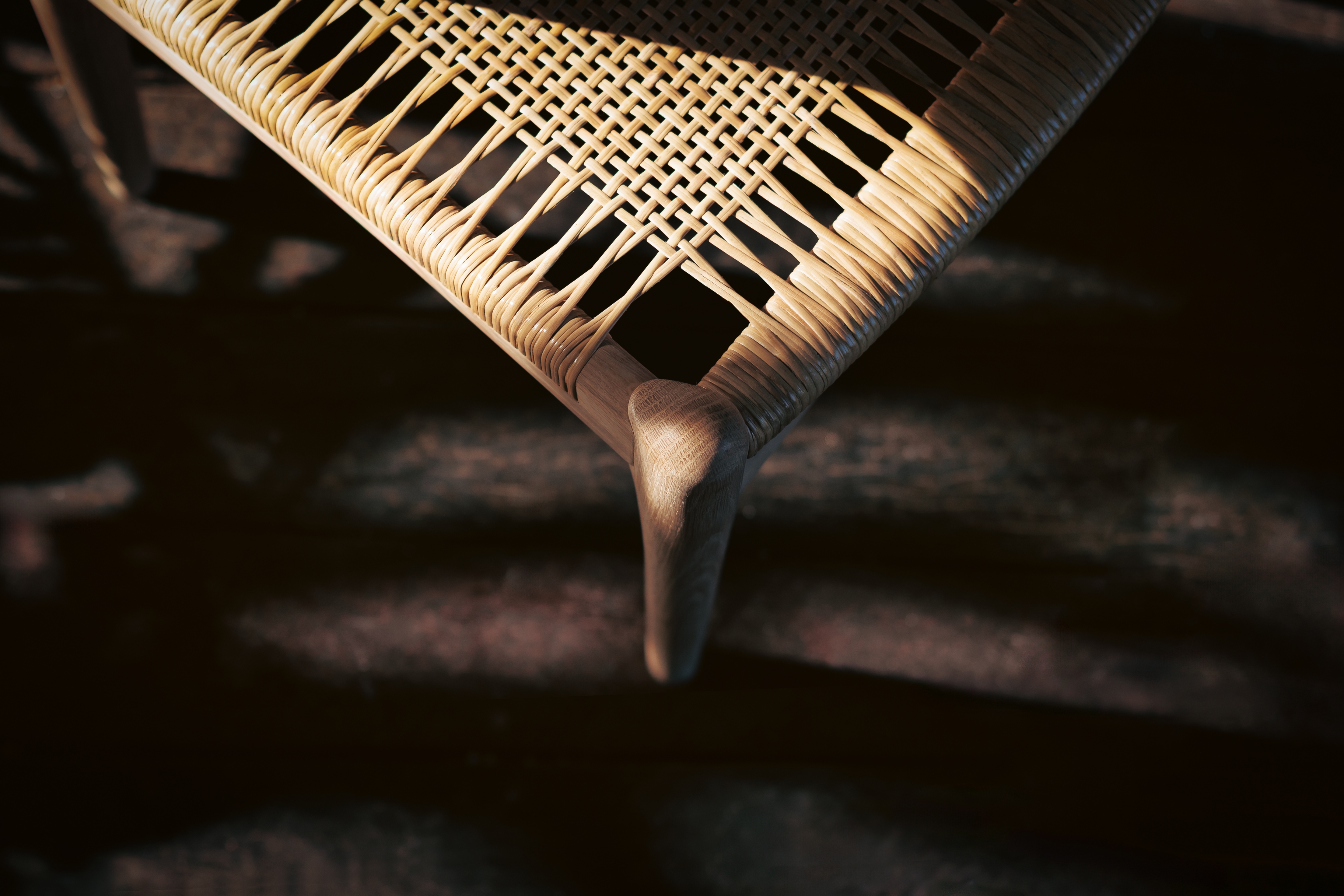
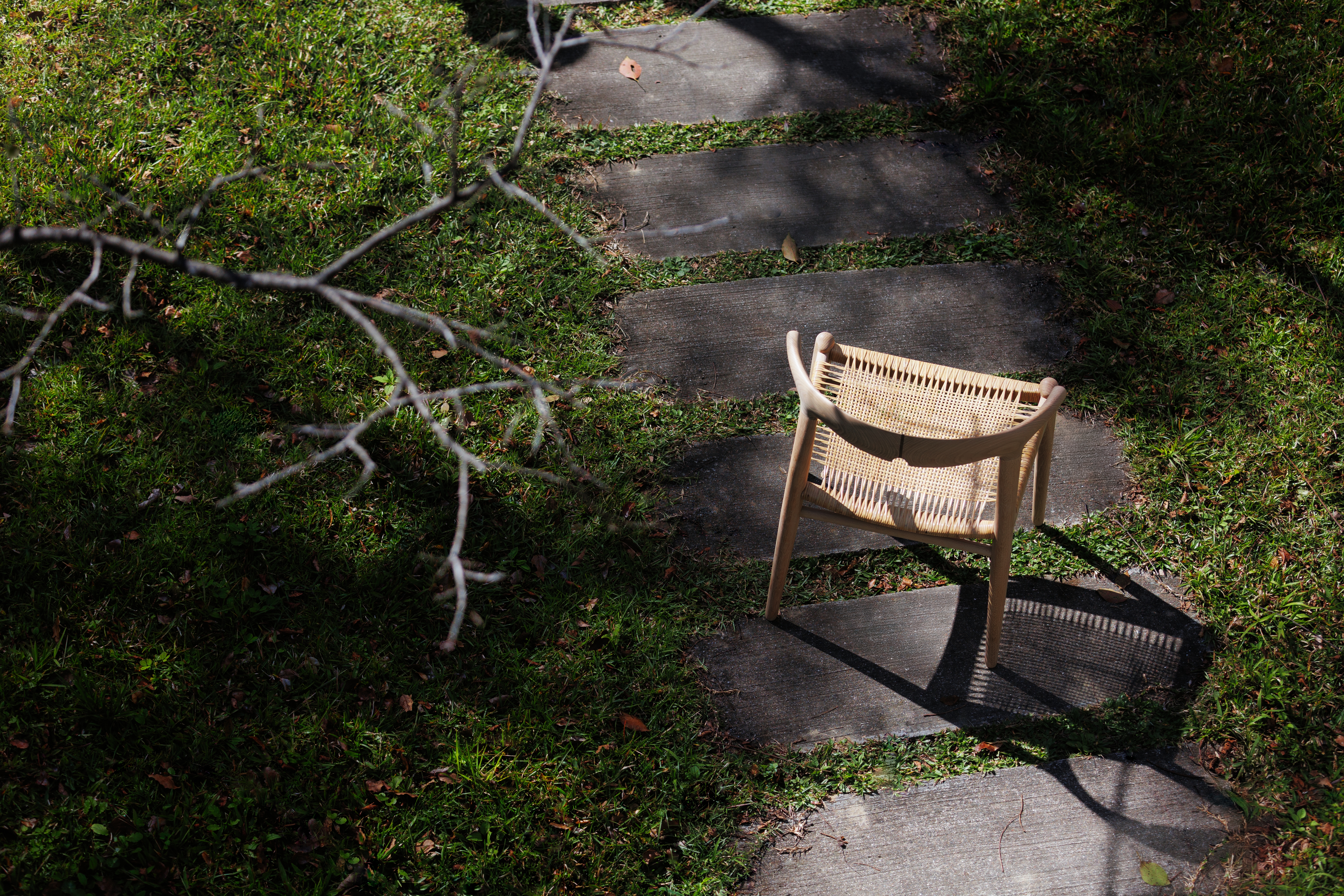
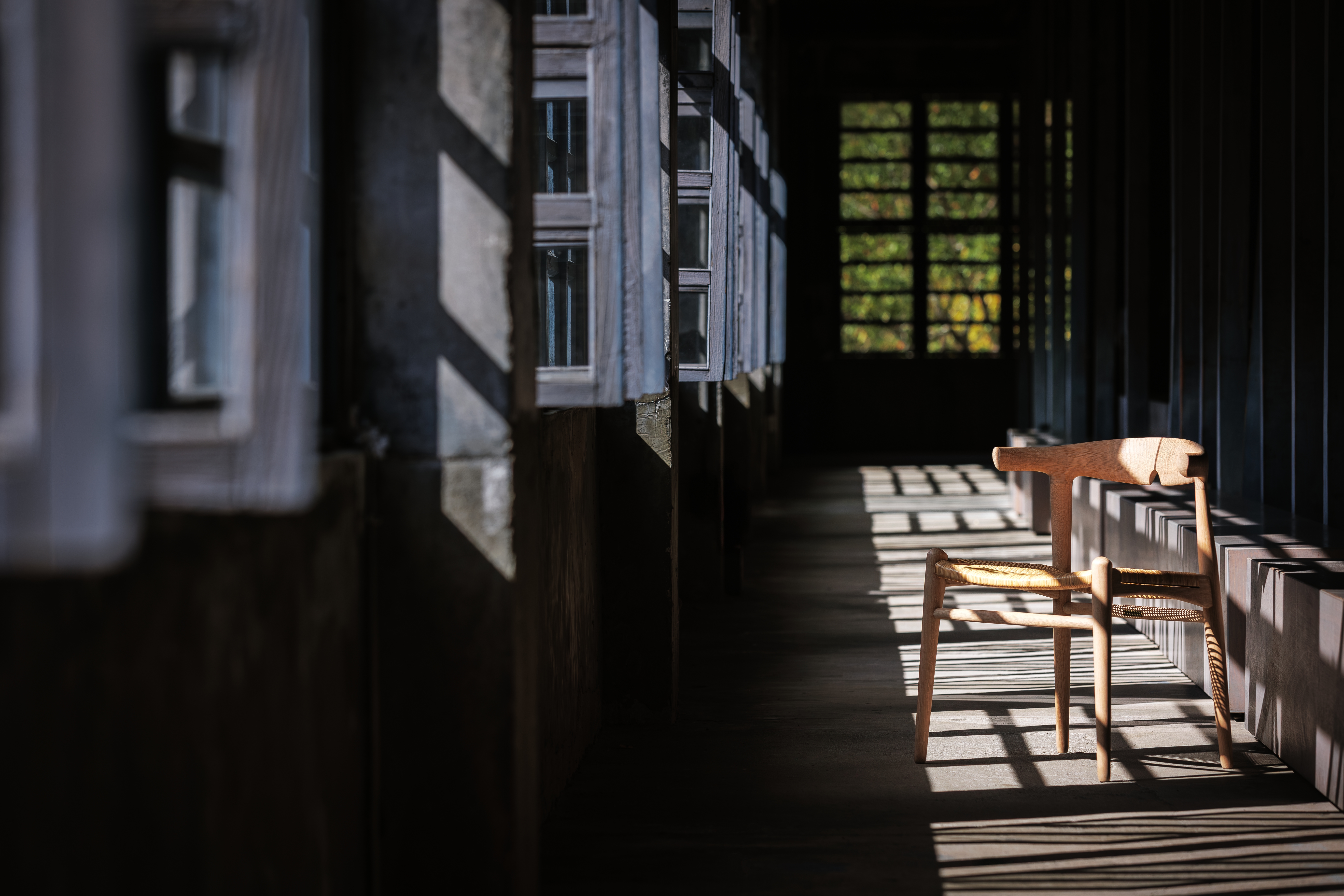
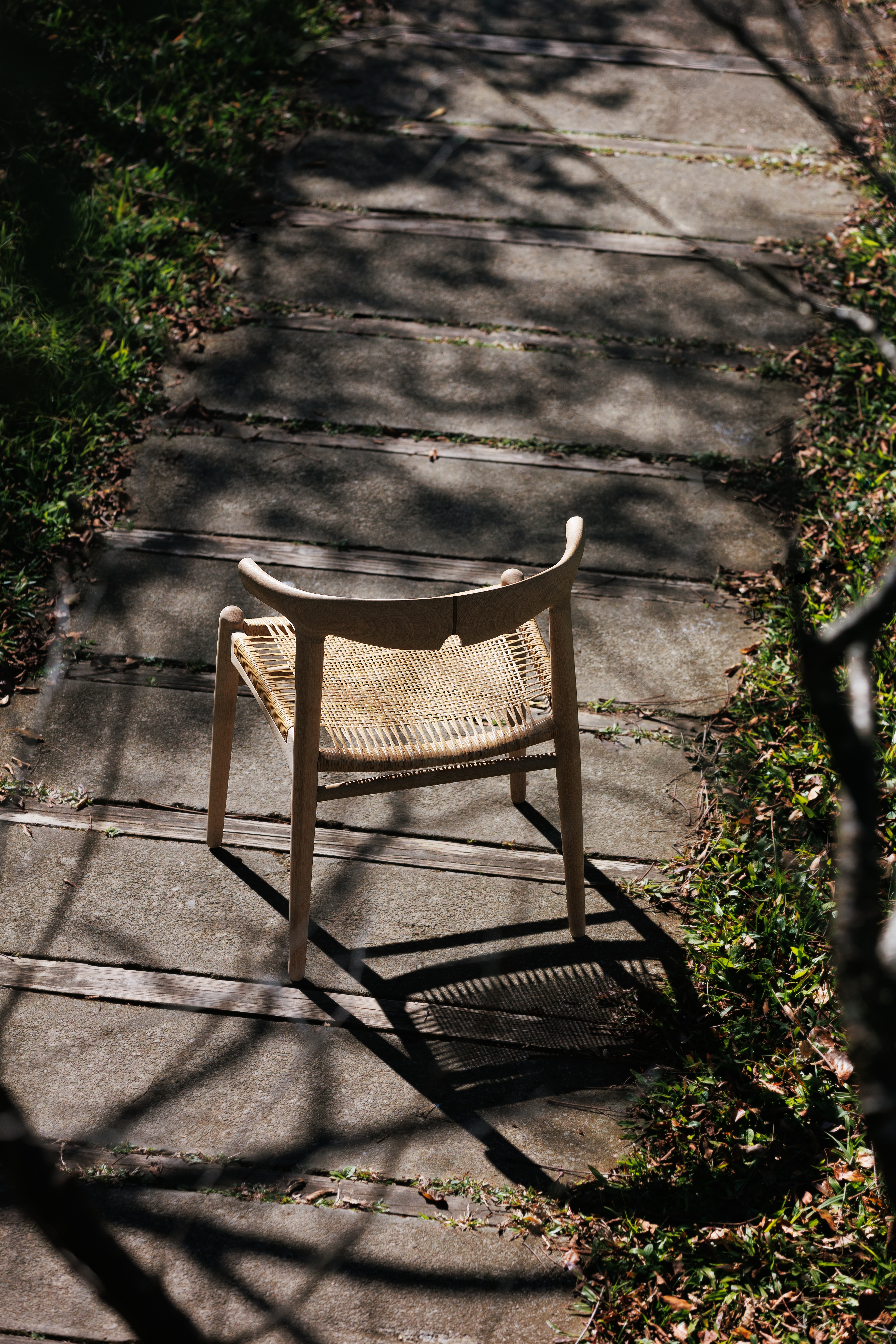
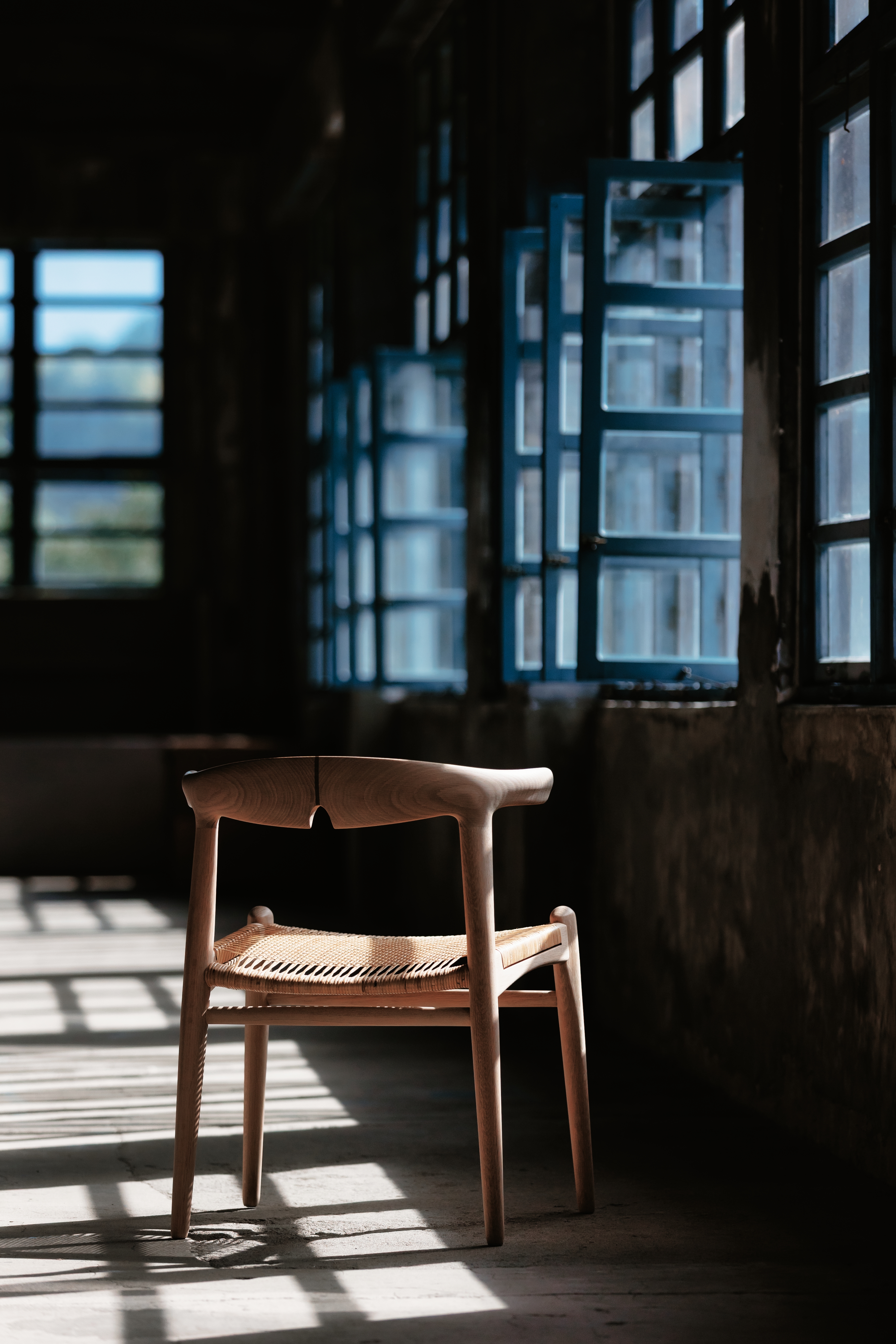
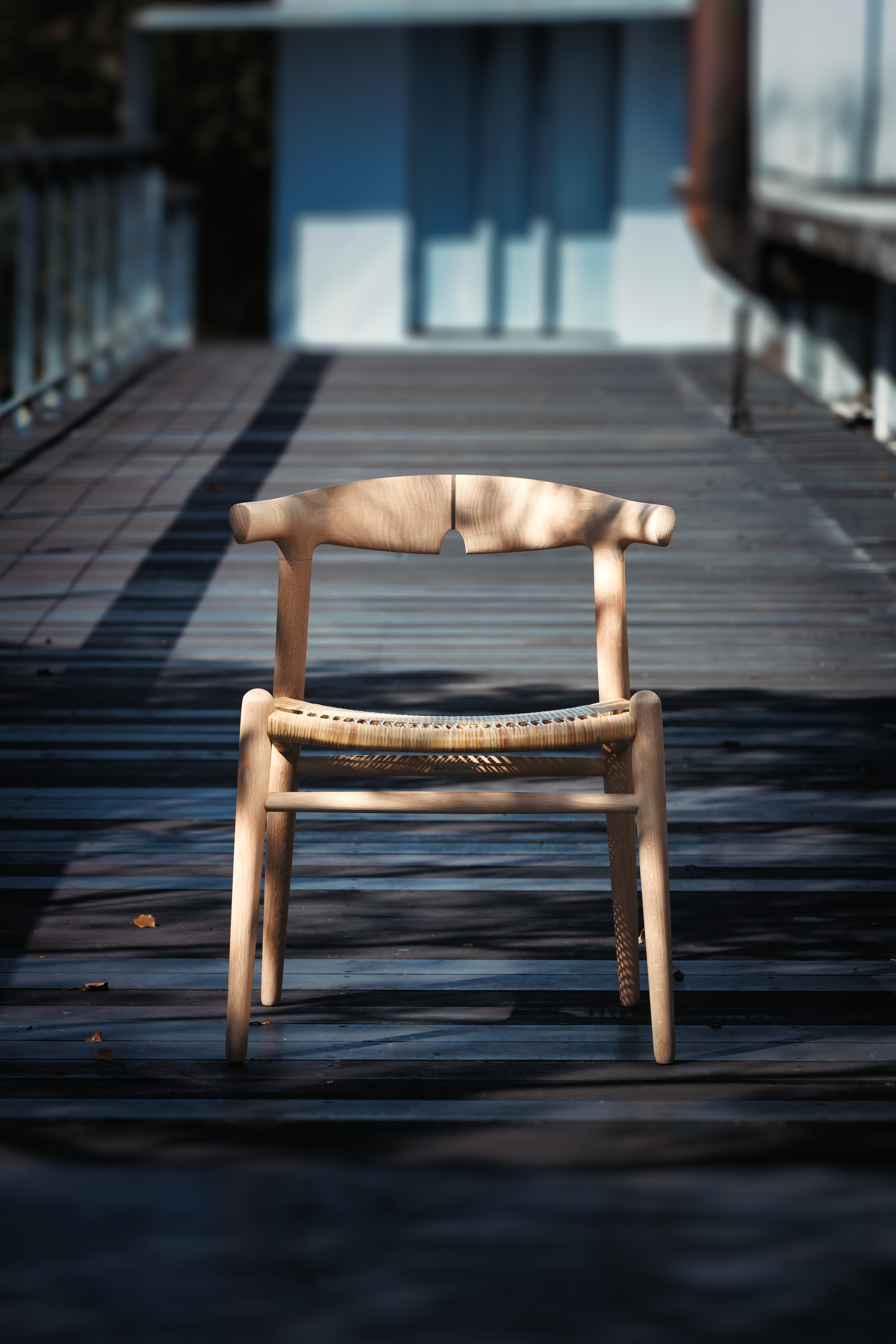
Its formal language is rooted in Taiwanese agricultural culture. The inverted U-shaped cut-out in the backrest is inspired by the nose ring of a water buffalo, reinterpreted as an abstract opening that signifies a transition from restraint to freedom. The front edge of the armrest recalls the form of a buffalo’s ear, while also evoking a comma—suggesting both pause and continuity within a journey. The rear legs follow the fluid motion of calligraphic strokes, while the inverted teardrop form at the top of the front legs corresponds to the structure of the human knee, maintaining a balance between visual expression and structural logic.
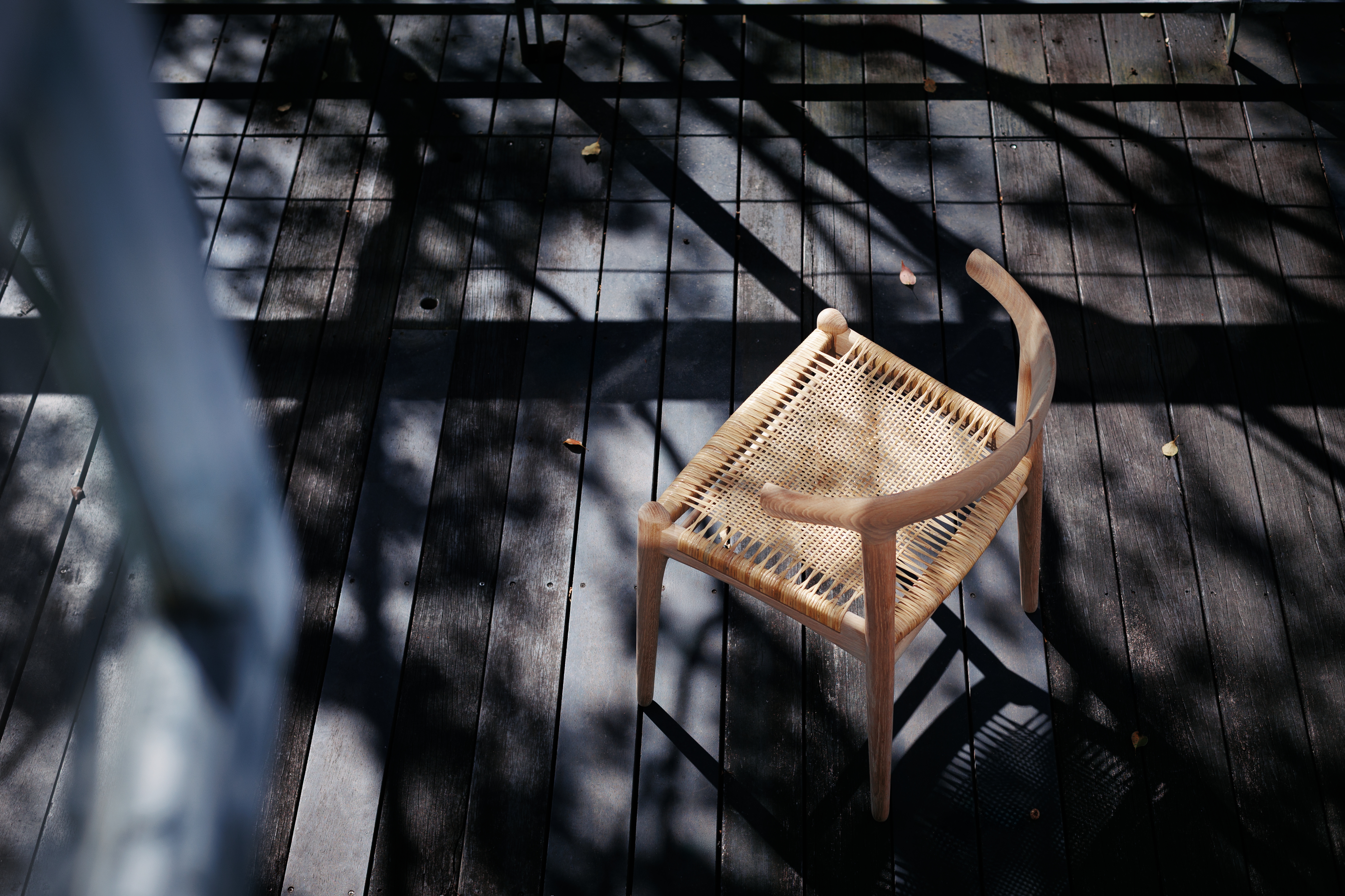
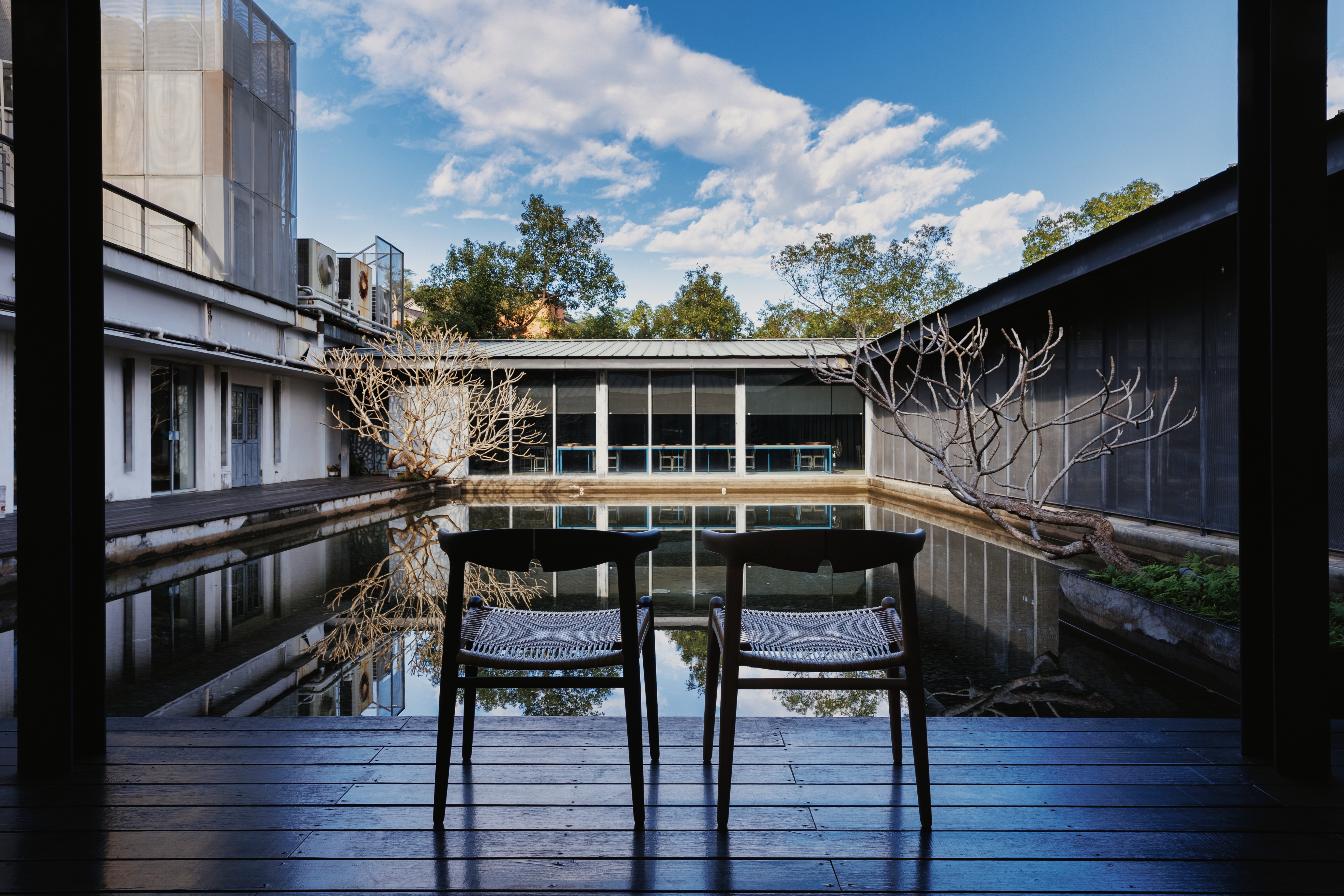
Functionally, the chair is rooted in ergonomic principles, integrating the seat, backrest, and short armrests to accommodate diverse sitting postures and extended use. Its structure achieves a careful equilibrium between stability and lightness, allowing it to integrate naturally into a wide range of living environments.In terms of craftsmanship, the chair incorporates traditional techniques from local artisans. Solid wood and woven rattan are selected to preserve their natural textures and a warm, gentle tactile quality. The woven rattan seat enhances breathability and seating comfort. Sustainability is embedded in the design through the use of recyclable materials and a simplified structural approach, reducing resource consumption while allowing the value of the object to accumulate over time.
What does “Er” in Er Chair mean?
At the beginning, designer Hung Wen-Liang began with the cross-sectional contour of the armrest, intuitively relating it to the character “ear.” It was a name closely tied to form—clear, yet overly direct.Soon, he paused. If a chair is defined solely by its form, the meaning it carries remains limited.Thus, “ear” was set aside. Through reflection and distillation, it gave way to another character—lighter, yet more profound: “Er.”
In classical Chinese, “Er” functions as a connector—linking, transitioning, and advancing meaning. It does not adhere to form, but guides the flow of meaning, allowing relationships to emerge—between rupture and continuity, where oppositions begin to shift and integration becomes possible.
“Er” embodies Hung Wen-Liang’s creative core, connecting past and present. It brings the warmth of craftsmanship and the precision of joinery into a contemporary context, while allowing modern design’s simplicity and function to reflect on the depth of craft.
For us, “Er” is no longer merely a word, but a method—an ongoing dialogue, constantly in the making, between body and object, past and present, form and perception.
Thus, the name Er Chair emerged in the moment of transition—from “ear” to “Er.”
《而椅》在空間與時間中轉譯文化,使設計回到日常,並被真正使用。作品融合北歐設計的節制精神與在地文化語彙,以「質存形變」為核心,透過結構與細節的精準掌握,呈現內斂而細膩的工藝質感。
造形語彙源自台灣農耕文化,將水牛鼻環轉譯為椅背倒 U 形缺口,以抽象透空的方式,隱喻由束縛走向自由。扶手前緣的斷面如牛耳,亦似逗點符號,象徵歷程中的轉折與延續;後椅腿線條取自書法筆勢的流動,前腿上端的倒水滴形呼應人體膝關節的結構,使視覺語彙與結構力學維持平衡。
在機能層面,以人體工學為基礎,整合座面、背靠與短扶手配置,對應多樣坐姿與長時間乘坐需求;結構兼顧穩定與輕量,使其自然融入不同生活場域。
在工藝上,結合在地工匠的傳統技藝,材質選用原木與藤編,保留天然紋理與溫潤觸感;藤編座面具備良好透氣性,提升乘坐舒適度;同時以永續為前提,透過可循環材料與簡化結構降低資源消耗,使設計價值隨時間持續累積。
《而椅》之「而」,何以為「而」?
起初,設計師洪文諒從扶手斷面的輪廓出發,直覺地將它指向「耳」。那是一個貼近形式的命名——清楚,卻也過於直接。很快,他停了下來。若一張椅僅被形式定義,它所承載的意義終究有限。
於是,「耳」未被保留。在他反覆思考與沉澱之中,轉為另一個更輕、卻更具深意的字——「而」。
「而」在漢文中,具有承上啟下、轉折或遞進之能,亦為一種連結。它不拘泥於形,而導引語意的流動,使關係得以生成——在斷與續之間,對立轉向,融合得以成為可能。
這也正是他創作的起點:一張椅,如何成為身體與空間之間的介面?當重量、姿態與支撐在坐下的瞬間彼此呼應,並於空間中安放,椅不再只是物,而是一場關係的生成,一種結構與美感的平衡。
「而」轉譯了洪文諒的創作核心,連結過去與現在,使工藝的溫潤與榫卯的嚴謹,在當代語境中轉化;亦使現代設計的簡約與機能,回望工藝的厚度。
於我們而言,「而」不再只是語詞,而是一種方法。在身與物、古與今、形式與感知之間,持續對話,不斷生成。
而椅之名,便誕生於「從耳到而」的轉念之間。


Transforms the Taiwanese water buffalo into a minimal form, integrating ergonomic and structural principles to support diverse sitting postures, combining craftsmanship and natural materials.


Rooted in Taiwan’s agricultural culture, the design reinterprets the imagery of the water buffalo. The inverted U-shaped notch in the backrest, derived from the nose ring, uses an abstract void to symbolize a transition from restraint to freedom. The work carries collective memories of diligence and resilience, allowing cultural meaning to be reconsidered and sustained through everyday use.
Rooted in Taiwan’s agricultural culture, the design reinterprets the imagery of the water buffalo. The inverted U-shaped notch in the backrest, derived from the nose ring, uses an abstract void to symbolize a transition from restraint to freedom. The work carries collective memories of diligence and resilience, allowing cultural meaning to be reconsidered and sustained through everyday use.


The design addresses sustainability through both material selection and structural strategy. Recyclable wood, rattan, and soap-based finishes are used to reduce environmental impact at the source. A simplified structure minimizes material consumption while extending the product’s lifespan, enabling the design to achieve a long-term balance between everyday use and environmental responsibility.
